
AI, Data Centers, and Real Estate: The New Location Premium
Data center real estate is increasingly priced around power, permitting, cooling, and connectivity rather than square footage alone.
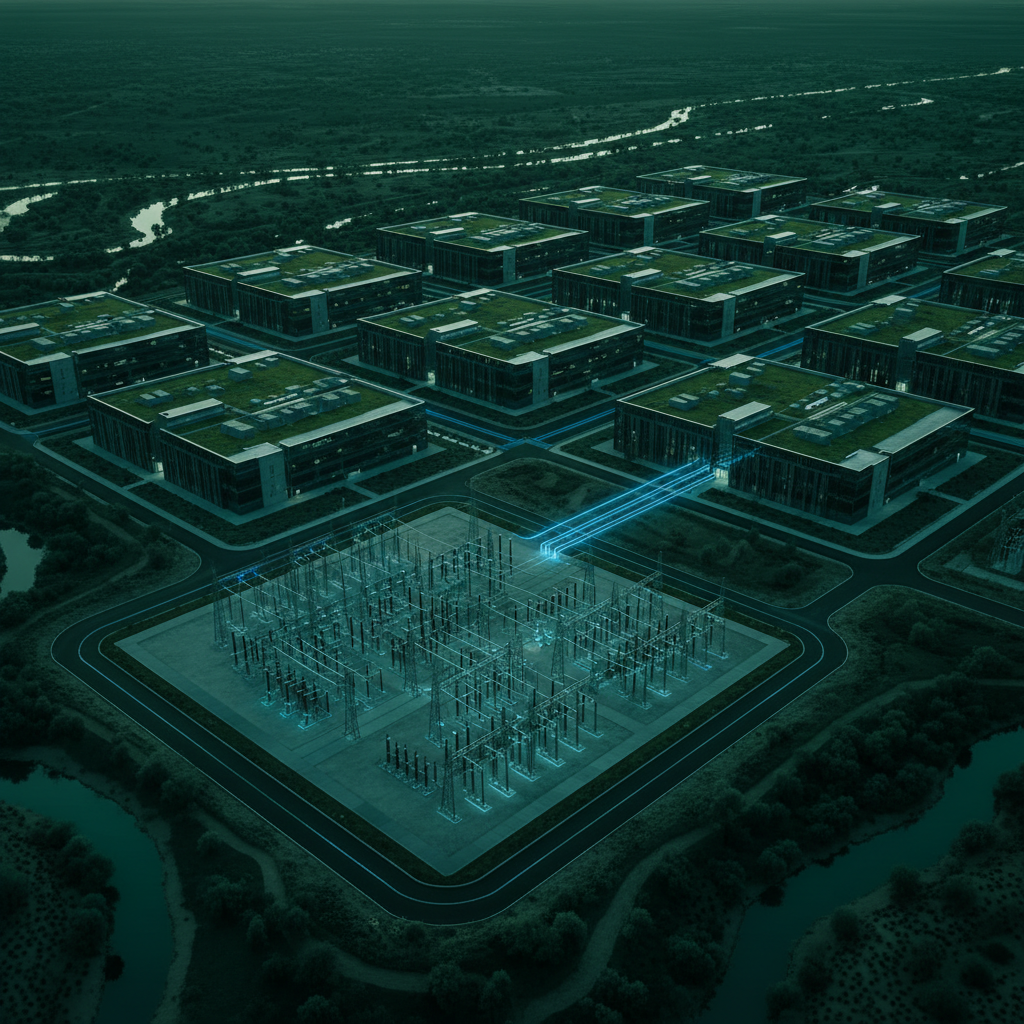
AI is changing how investors think about data center real estate. The most valuable sites are not simply large buildings. They are locations where power, permitting, fiber, cooling, tenant demand, and community acceptance converge.
Private-market outlooks for 2026 consistently point to AI as a driver of data center and infrastructure demand. But the location premium is becoming more nuanced. A site with fast power availability and strong network access can be worth more than a larger site stuck in an interconnection queue.
The scarcity stack
For AI workloads, investors should evaluate a scarcity stack: electrical capacity, grid reliability, cooling efficiency, fiber density, land entitlement, water strategy, construction labor, and tenant proximity. Each layer can create friction. Each solved layer can create value.
This is why some data center platforms behave less like generic real estate and more like operating infrastructure. Execution capability matters. Tenant relationships matter. Energy procurement matters.
Underwriting beyond rent
Traditional real estate metrics remain useful, but they are incomplete. Investors should model power costs, capex escalation, utilization, tenant concentration, refresh cycles, and regulatory risk. They should also examine whether a facility can adapt to changing rack density and cooling requirements.
In AI real estate, location means power plus permission plus connectivity.
As AI demand grows, the best sites may become strategic assets. The challenge is paying a price that leaves room for execution risk and future technology change.