
AI Is No Longer Just Influencing Markets — It Is Defining Them
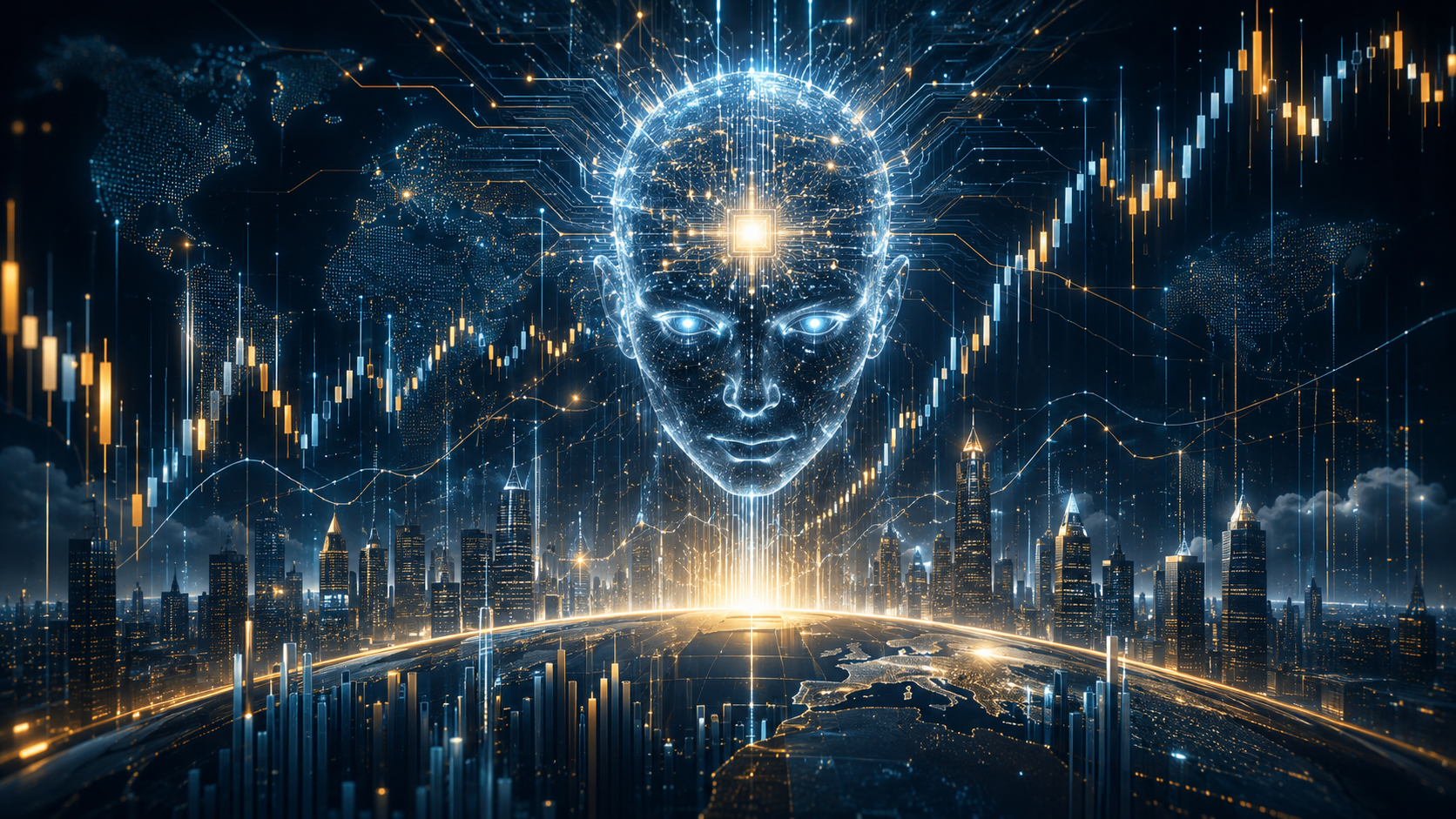
For decades, financial markets have been shaped by major macroeconomic forces: interest rates, oil prices, central bank policy, geopolitical events, and consumer demand. Today, however, a new force has emerged powerful enough to reshape nearly every sector of the global economy — artificial intelligence.
AI is no longer simply another technology trend. It is becoming the foundational infrastructure of the next economic era. From Wall Street trading desks to multinational corporations, from healthcare systems to e-commerce platforms, AI is rapidly transforming how businesses operate, compete, and create value. And financial markets are responding accordingly.
The Shift From Technology Theme to Economic Engine
In previous market cycles, emerging technologies often remained confined to specific industries. Smartphones primarily benefited hardware and telecom companies. Social media boosted digital advertising. Cloud computing transformed enterprise software.
AI is different.
Artificial intelligence cuts across nearly every industry simultaneously. It is not merely a product — it is a productivity engine capable of reshaping labor, decision-making, automation, logistics, customer engagement, research, and creativity itself.
This broad applicability is precisely why investors are treating AI not as a temporary trend, but as a structural transformation comparable to the industrial revolution or the rise of the internet.
The market is increasingly rewarding companies that can either build AI infrastructure, monetize AI applications, or use AI to significantly improve profitability.
Capital Is Flooding Into the AI Ecosystem
One of the clearest signs that AI is defining markets is the unprecedented level of capital flowing into the ecosystem.
Technology giants are spending billions of dollars expanding data centers, acquiring GPUs, building AI models, and scaling cloud infrastructure. Venture capital firms are aggressively funding AI startups. Public market investors are pouring money into AI-linked equities, particularly semiconductors, cybersecurity, cloud computing, and enterprise software companies.
This surge in spending is creating a powerful economic feedback loop:
* More AI demand drives higher infrastructure spending.
* Higher infrastructure spending boosts corporate earnings.
* Rising earnings attract more investor capital.
* More capital accelerates AI development further.
As long as this cycle continues, AI-related businesses are likely to remain at the center of market leadership. AI Has Become the New Market Narrative
Markets often move around dominant narratives. In the past, investors focused on themes such as globalization, e-commerce, electric vehicles, or post-pandemic recovery.
Today, AI has become the defining narrative driving investor sentiment.
Earnings calls across industries increasingly mention AI integration strategies. Companies without a clear AI roadmap are beginning to face pressure from investors questioning their long-term competitiveness.
Meanwhile, firms positioned as AI leaders often receive premium valuations, even when current revenues have not fully caught up with future expectations. This shift highlights a crucial reality: markets are now pricing companies not just based on present performance, but on their relevance in an AI-driven future.
The Rise of the AI Productivity Economy Perhaps the most important long-term implication is productivity.
Historically, major productivity breakthroughs have driven massive economic expansion. The steam engine, electricity, computers, and the internet all fundamentally increased efficiency and output.
AI may become the next major productivity revolution.
Businesses are already using AI to:
* Automate repetitive tasks
* Improve customer service
* Optimize supply chains
* Accelerate software development
* Enhance marketing efficiency
* Analyze massive datasets
* Reduce operational costs
Over time, this could significantly increase corporate margins and reshape global labor markets. Investors understand this potential. That is why AI-driven companies continue attracting enormous attention from both institutional and retail capital.
Risks Still Matter
Despite the optimism, the AI-driven market environment is not without risks. Valuations in many AI-related stocks have expanded rapidly, sometimes far ahead of current earnings. Markets may also underestimate challenges such as regulation, energy consumption, infrastructure bottlenecks, data privacy concerns, and competitive pressures.
In addition, momentum-driven rallies can become vulnerable to corrections if economic growth slows or interest rates remain elevated.
History shows that transformational technologies often experience periods of excessive speculation before long-term winners fully emerge.
The AI revolution may ultimately create enormous value — but not every company associated with AI will succeed.
A Defining Era for Investors
We are entering a period where AI is no longer merely a sector within the market. It is becoming the framework through which the market evaluates future growth, competitiveness, and innovation. This transition carries enormous implications for investors, businesses, policymakers, and society itself.
The companies leading the AI transformation today could become the economic giants of the next decade. At the same time, industries slow to adapt may struggle to remain competitive in an increasingly automated and data-driven world.
“The biggest mistake investors can make today is treating AI like just another tech cycle. AI is becoming the operating system of the global economy. The companies that adapt early will compound exponentially, while those that ignore it risk becoming irrelevant faster than the market expects.” — Donny, founder of Nestcorp
For investors, the challenge is no longer whether AI matters.
The challenge is understanding how deeply AI is reshaping the global financial system — and positioning accordingly.
Because AI is no longer just influencing markets.
It is defining them.